
Every heirloom has a story to tell, and with each home cook we meet, we’re given a glimpse into pieces of their family history. Upon entering Ginger Herman’s home for Issue 04, we couldn’t help but notice the rolling pin she uses—passed down from her grandmother, Marlene Prins—still at work making Grandma Prins’ Rolls. This simple wooden tool sparked our curiosity: where did the rolling pin begin its journey? As it turns out, its history stretches all the way back to the 9th century.
Let’s go back in time…
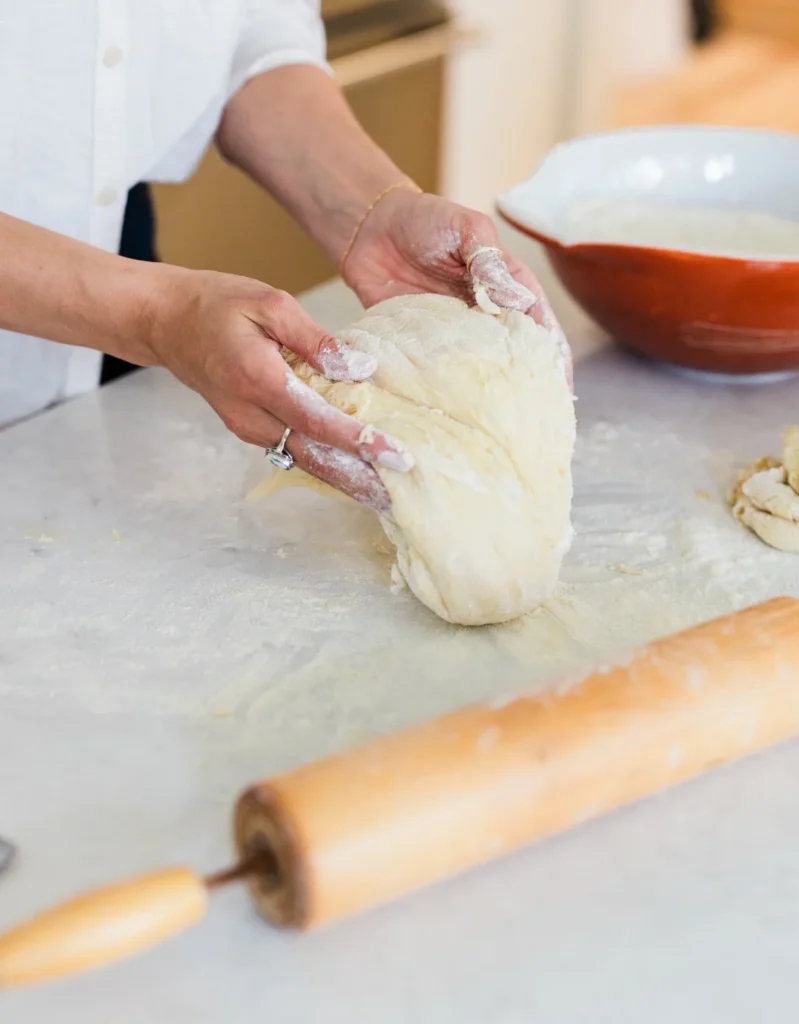
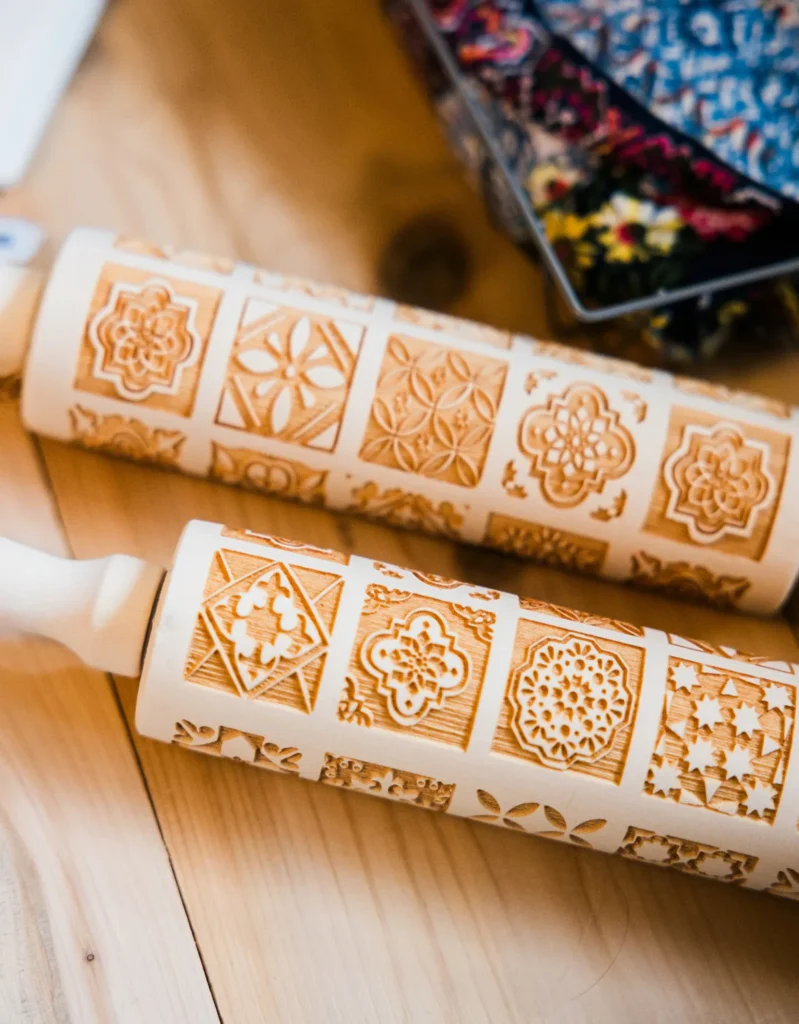
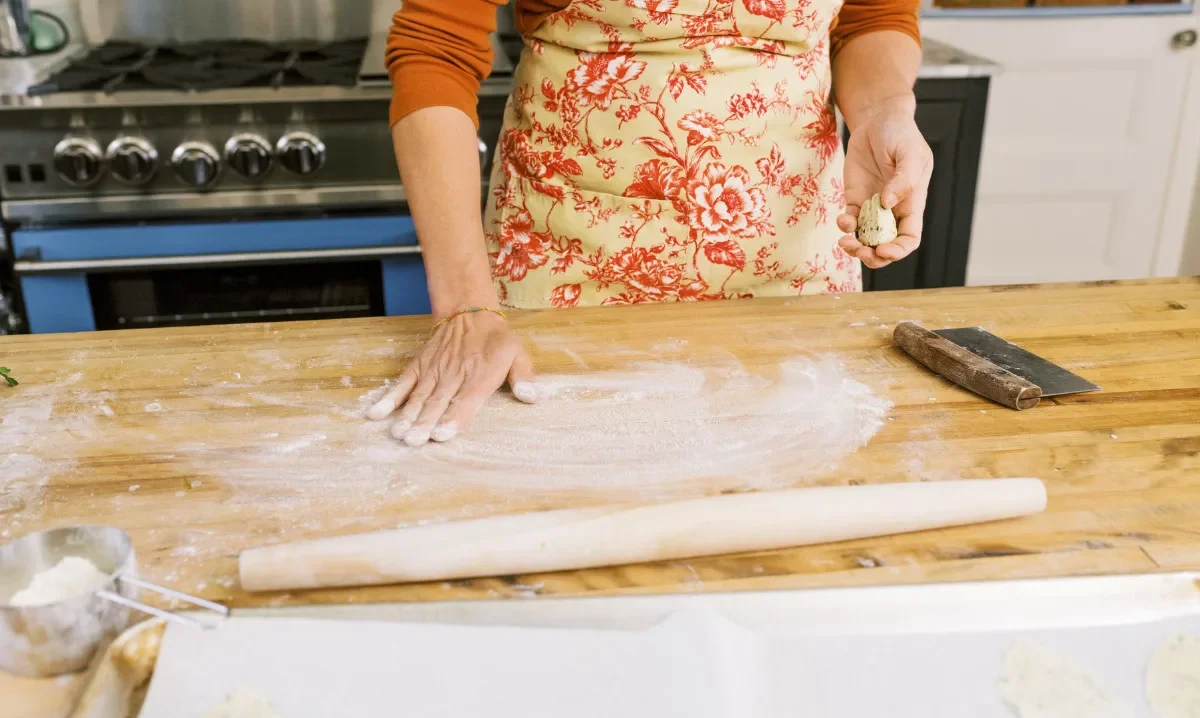
Some sources suggest that rolling pins were used as early as ancient Egypt and Rome, though these were simple rods of wood or stone, serving as functional baking tools. By the 9th century, the Etruscans, a pre-Roman civilization in what is now central Italy, crafted rolling pin-like implements from wood, baked clay, stone, or even glass.

As baking traditions spread throughout medieval Europe, wooden rolling pins became a familiar sight in kitchens. Most were carved from a single piece of wood, sometimes with the ends tapered to serve as makeshift handles. They were simple, practical tools, shaped by hand. The innovation of separate handles didn’t come until centuries later, in the 1860s, when J.W. Reed patented a new design: a hollow, wooden cylinder mounted on a central rod with separate handles at each end. Suddenly, rolling dough became smoother, easier, and far more efficient. It was a transformation that set the stage for the rolling pins we still use today.
The rolling pin wasn’t the only family keepsake with a story to tell. At first glance, it could be mistaken for a honey dispenser or perhaps even a miniature server for shots. In reality, it’s something far more distinctive—a whiskey barrel decanter. This charming heirloom once belonged to Ginger’s great-grandmother, Esther Deleske, complete with a little stand and side hooks to hold the tiny mugs that were passed down with it after her passing.
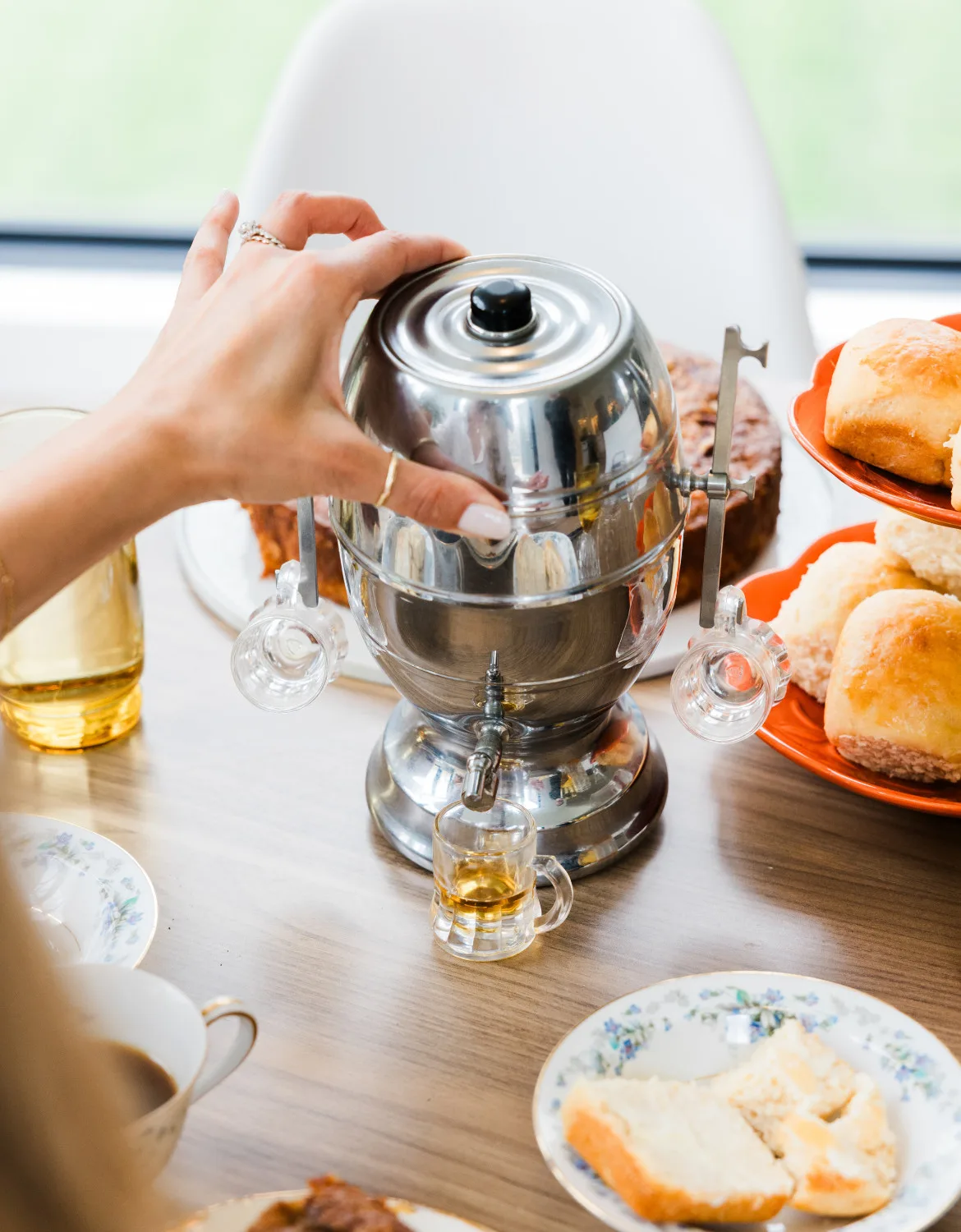
The practice of using decanters dates back to whiskey’s earliest days. Before bottling became standard, the spirit was sold straight from the barrels it was aged in. Retailers and traders would draw off portions into smaller containers for sale or serving. Decanters became a practical and decorative solution—not only did they make whiskey easier to pour and present, but they also helped to preserve its quality with an airtight stopper that slowed evaporation.

Ginger Herman (left) with her mom, Sue Prins. Issue 04: Fruit Ridge.
Heirloom treasures remind us that memory often lives in the everyday. They hold the warmth of kitchens past and the echoes of the people who came before us. Each treasure becomes a keeper of stories, a bridge between generations, and a reminder of connection, both in the kitchen and at the table.
If you’re curious to see how heirlooms shape the stories we tell, you’ll find more family treasures waiting in Issue 04: Fruit Ridge. Subscribe today and get the current issue free!
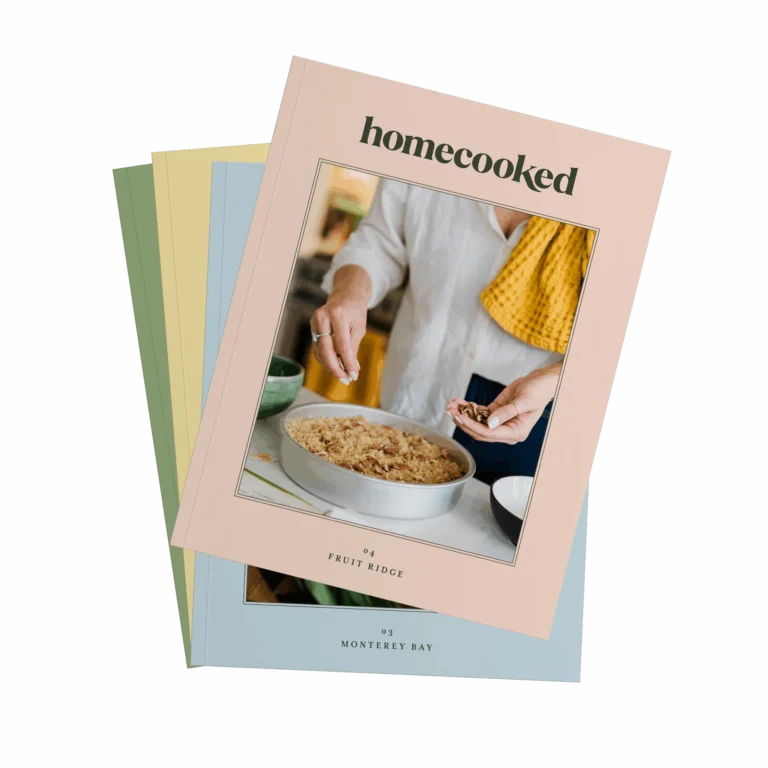
Issue 04: Fruit Ridge is here! To celebrate, we’re giving new subscribers a FREE copy!
Sign up for our newsletter to get exclusive behind-the-scenes stories, home cook spotlights, and more from America’s kitchens—plus receive $10 off your subscription when you join us.